How Playing Nice Works in Marketing…and When It Doesn’t.

Rival – noun; ri·val ˈrī-vəl ; 1
a
: one of two or more striving to reach or obtain something that only one can possess
“…were rivals for her affection”
b
: one striving for competitive advantage
“The teams are longtime rivals.”
Before writing off the 2006 to 2009 “Mac versus PC” strategy as out of date as an @hotmail.com email address, consider first the ever shifting and cyclical societal landscape of rivalry tactics.
Taking disparaging shots at a competitor’s image (or the image of their consumers!) whether blatant or implied, has gradually been replaced by a more “team player”, “there’s room for everyone” attitude. It reminds me of Michael Jordan and Charles Barkley and how they talked smack on the court when playing opposite of one another and would playfully roast one another in interviews. But, if you asked them in seriousness about the other’s abilities, they paid their highest respects.
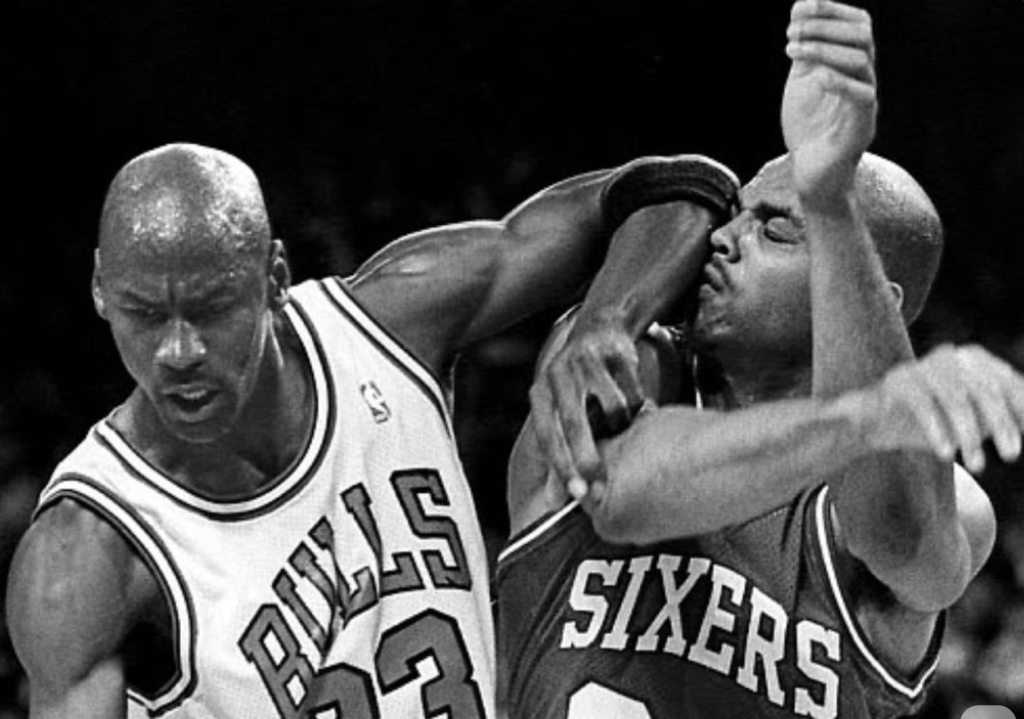
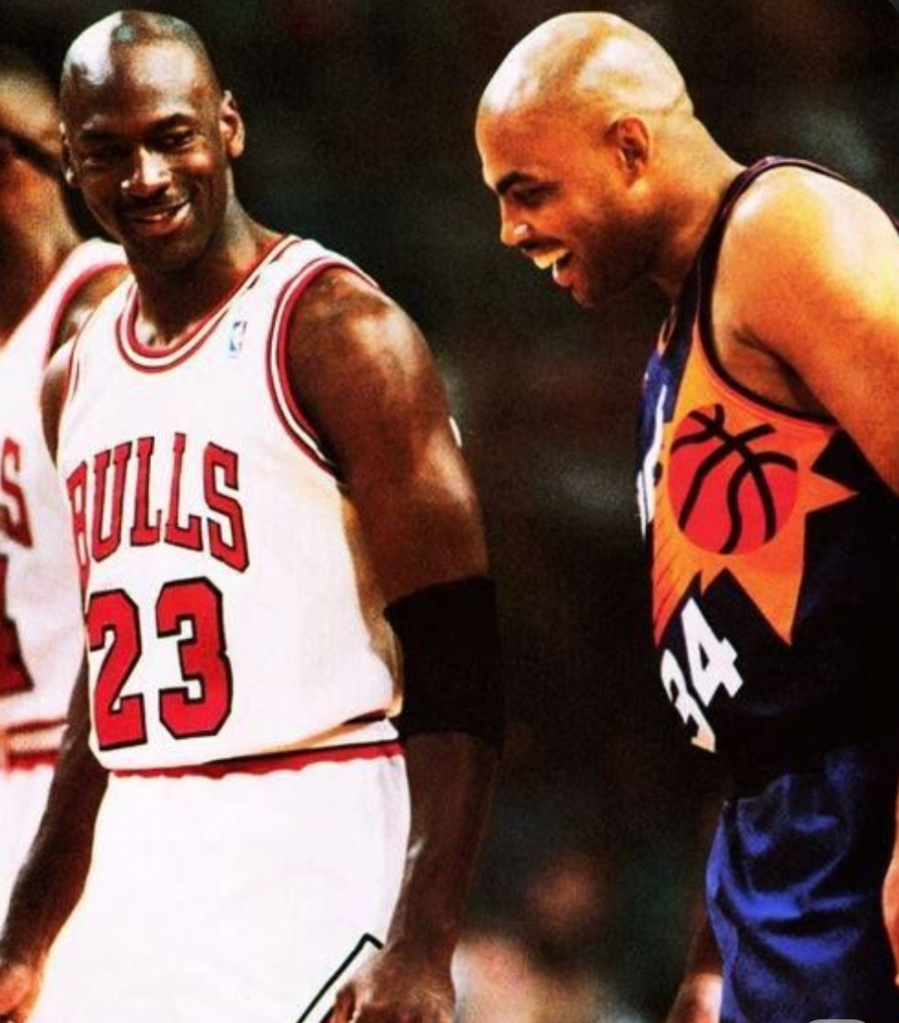
That similar spirit in marketing has grown exponentially in recent decades, most notably in the 21st century. With the advent of multi-social media applications, popularity and adopted practices of positive reinforcement and messaging as well as diversity and inclusion has soared.
Consumers are responding favorably to competitor praise because, “In a world where consumers are increasingly fed up with divisive, vitriolic messages, it’s no surprise that consumers might appreciate this kinder, more positive tone” (Cutright et al., 2022). This tactic also creates an immediate perception through automatic processing (otherwise known as “thin-slice theory“), that the corporate culture of the praiser is one of both confidence and integrity.
The praise tactic influences brand positioning and consumer loyalty because the praise – the “taking the high road” position – acts as a pair of shears, slicing through all of the brand noise, negative and suspicious messaging; evaporating research and decision fatigue inside a few minutes (or even in a few seconds) of goodwill.
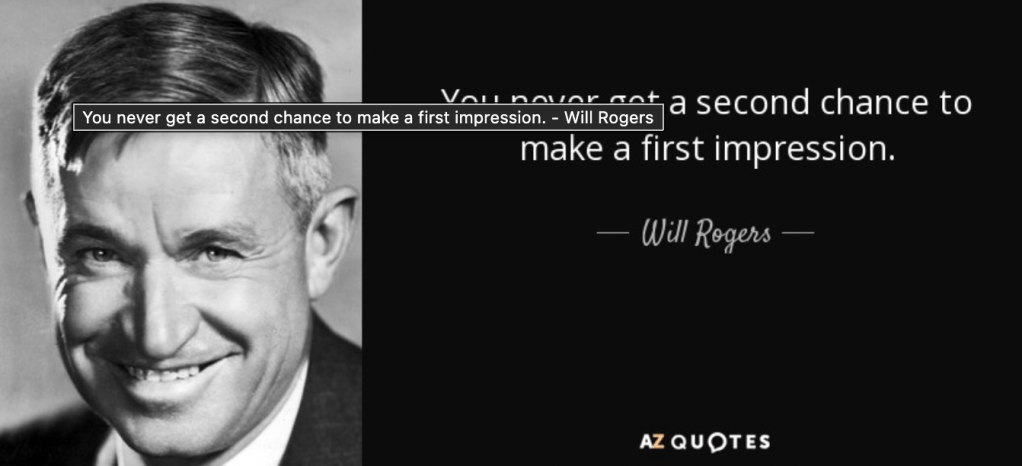
The Will Rogers quote, “You never get a second chance to make a first impression”, tips its hat to the term, “thin-slice theory” (a term coined by Nalini Ambady and Robert Rosenthal). In the context of consumer behavior, automatic processing allows the individual to make quick judgements, increasing engagement and purchase intent.
The way it works is, “…thin slices are thus defined as brief excerpts of expressive behavior, sampled from the behavioral stream, that contain dynamic information and are less than 5 minutes long. Thin slices can be sampled from any available channel of communication, including the face, the body, speech, the voice, transcripts, or combinations of all of these” (iresearch.net).
In a way you could say there are instantly recognizable signals that create reflex decisions and/or judgements, which could also be called “instinct”. And so it is crucial in a marketing strategy that includes praise or is the epitome of smack talk, “being aware of and then preparing for the variety of interactions you encounter increases the chances that the impression you are trying to make will be the impression the other person has of you…knowing that these macro traits are observed and judged on a subconscious level…(Thompson, 2012).
Praising your competitors is for companies and services where diplomacy is expected, or from a brand that has enough bad-assery in the market that they don’t need to get down in the dirt and their extended compliments will only surprise and strengthen their image in the consumer’s mind. Conversely, it’s critical to gauge what strategy is going to work best for your audiences when, “We’re in an attention economy—playing it safe is often the riskiest move you can make,” said Mike Harris, COO and partner at PR firm Uproar by Moburst (Klara, 2026).
There is a current uptick in rivalry-based marketing. Follow competitors Wendy’s and Burger King and how they followed up with thinly veiled “talking smack” videos, capitalizing on McDonald’s CEO Chris Kempczinski’s painfully visible discomfort when trying McD’s Big Arch burger on camera. Or the Super Bowl ad, when Pepsi had…” a polar bear, one of Coke’s mascots—take the Pepsi Challenge, a blind taste test that first hit TV in 1975. With the two cans of soda right on the table, labels facing out, the bear chose Pepsi… co-opting a competitor’s own mascot in the effort? That was the move that turned a jab into a right hook” (Klara, 2026).
That’s cold (pun intended).
The “calculated swipe has become an integral part of marketing strategy…it “shows up as modern” in an increasingly in-your-face culture…Finally, he said, combat is often what the social crowd is looking for anyway” (Klara, 2026).
Some companies are destined foes; others are beasts at the sincere compliment game. No matter how they play out their discord or support, the competition is always in play.
Cutright, K., Du, K., Zhou, L. (2022, March 24). Research: When praising the competition benefits your brand. Harvard Business Review. https://hbr.org/2022/03/research-when- praising-the-competition-benefits-your-brand
Klara, R. (2026, March 6). Why so many brands are throwing shade at their competitors right now, brands get off on looking nervy, and social media loves a good fight. ADWEEK.com. https://www.adweek.com/brand-marketing/why-so-many-brands-are-throwing-shade-at-their-competitors-right-now/
Thin slices of behavior. (n.d.). pyschology.iresearchnet.com. https://psychology.iresearchnet.com/social-psychology/social-cognition/thin-slices-of-behavior/
Thompson Ph.D., Jeff. (2012, March 24). Thin slices & first impressions: Thin slices are not food but still very important. Psychology Today.


Leave a comment